

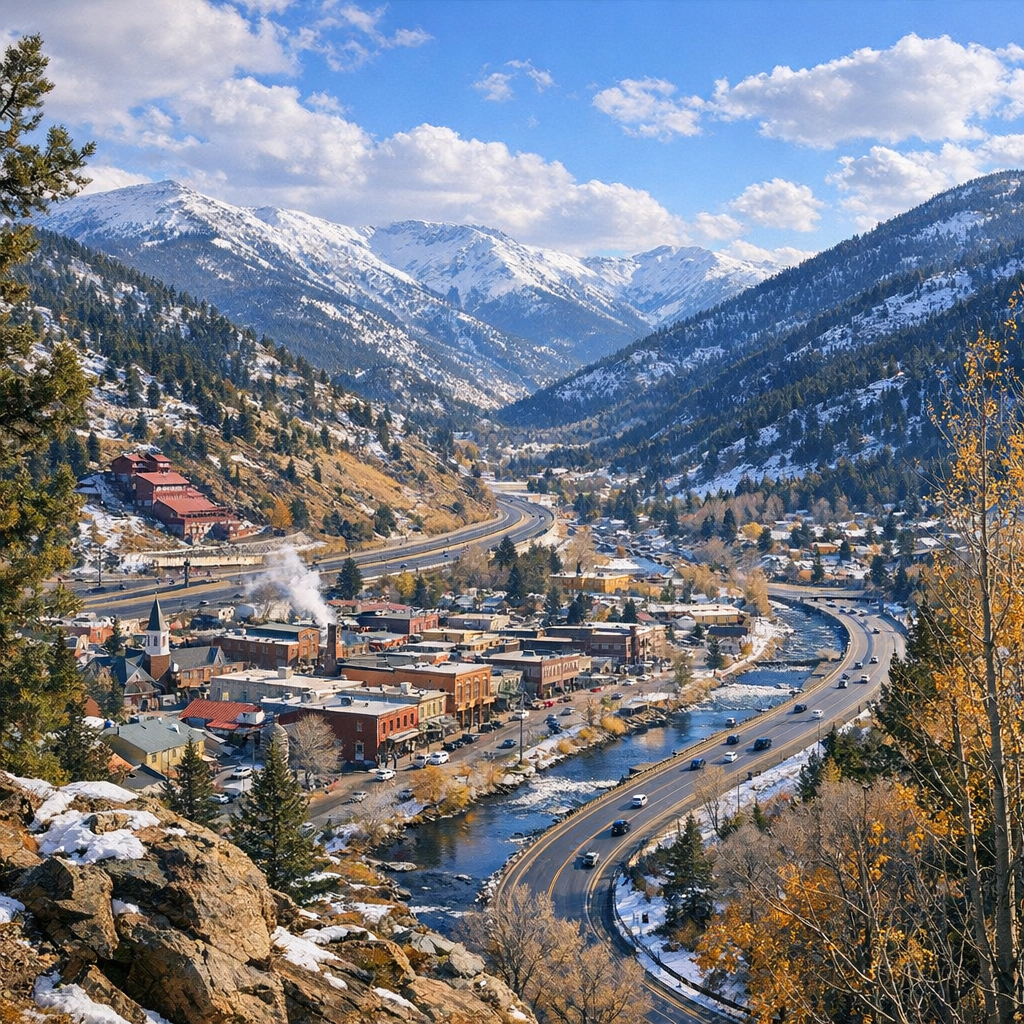
Idaho Springs, nestled in the heart of Colorado’s Rocky Mountains, experiences a diverse climate characterized by distinct seasonal variations. Understanding these patterns is essential for residents and visitors alike.
Winter: Cold and Snowy
From December through February, Idaho Springs faces cold temperatures and significant snowfall. Average low temperatures hover around 15°F (-9°C), with highs reaching approximately 39°F (4°C). Snowfall is substantial, averaging 2.32 inches in January and increasing to 4.57 inches in February. Despite the cold, the town’s mountainous surroundings often provide a picturesque winter landscape.
Spring: Gradual Warming and Increased Precipitation
March through May marks a transition period with gradually warming temperatures and increased precipitation. March sees average highs of 47.8°F (8.8°C) and lows of 21°F (-6.1°C), with snowfall peaking at 6.73 inches. By May, temperatures rise to an average high of 61.8°F (16.6°C) and a low of 34.4°F (1.3°C). Precipitation also increases, with May averaging 2.41 inches, contributing to the lush greenery of the region.
Summer: Warm Days and Cool Nights
June through August brings warm days and cool nights, offering a pleasant summer climate. July, the warmest month, features average highs of 79.4°F (26.3°C) and lows of 48°F (8.9°C). Rainfall is relatively consistent, with July averaging 2.44 inches over approximately 17.8 rainy days. The low humidity and mountain breezes keep the town comfortable even during warmer periods.
Fall: Cooling Temperatures and Decreasing Precipitation
September through November sees cooling temperatures and decreasing precipitation. September averages highs of 70.6°F (21.4°C) and lows of 39.1°F (3.9°C), with rainfall averaging 1.59 inches. By November, temperatures drop to average highs of 47.2°F (8.4°C) and lows of 21.7°F (-5.7°C), with precipitation decreasing to 0.81 inches. The fall foliage provides a vibrant backdrop to the town’s historic charm.
Environmental Considerations
Idaho Springs’ climate is classified as humid continental (Köppen Dfb), characterized by significant seasonal temperature differences and relatively even precipitation throughout the year. The town’s elevation and mountainous terrain contribute to its unique weather patterns, including sudden changes and microclimates. Residents and visitors should be prepared for rapid weather shifts, especially when engaging in outdoor activities.
Understanding the local climate is crucial for planning and preparedness, ensuring safety and enjoyment in Idaho Springs’ beautiful natural surroundings.